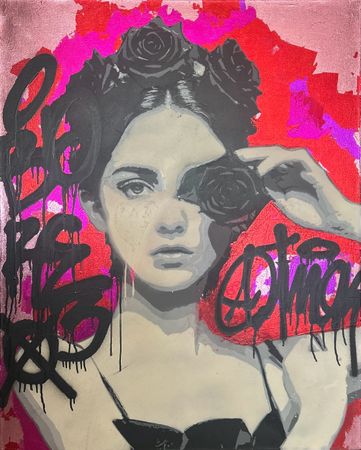
MIS ESPINAS TU VENENO
Ales x Luisa | Stand : Z4(G04)
In the shadow, the black rose blooms.
Not as ornament, but as threshold. It grows where light hesitates, in the quiet territories of repression, grief, and unspoken desire. Its petals are not symbols of fragility, but of density: layered histories folding inward, protecting a core that refuses innocence.
The thorns do not merely pierce the skin; they expose it. They tear through the illusion of detachment. In this body of work, the wound is not incidental, it is constitutive. To approach the rose is to consent to transformation.
Its venom does not announce itself. It seeps, subtle and irreversible, into the skin of forgetting. What we deny resurfaces as mark.
But the injury it leaves is not merely destructive; it is revelatory. The wound becomes a site of awareness, a permanent inscription that alters perception. To be marked by the rose is to carry its knowledge, that intimacy is risk, that beauty has consequence, that shadow is fertile ground.
- Art Style: Contemporary
- Art Medium : Stencil, gold leaf & acrylic spray on canvas
- Size and orientation: Rectangular, vertical.
- Dimensions (cm): Height- 120.00, Width- 80.00, Depth- 4.00
- Colour: Black, pink, grey, white & Red
- Price: AED 13200